Historical significance, fame of the temple, greatness of the place, brief history of the place
Verse: O inhabitant of Kaleshwara! O hope of Kaleshwara!! O remembrance of Kaleshwara! O destruction of all sins!!
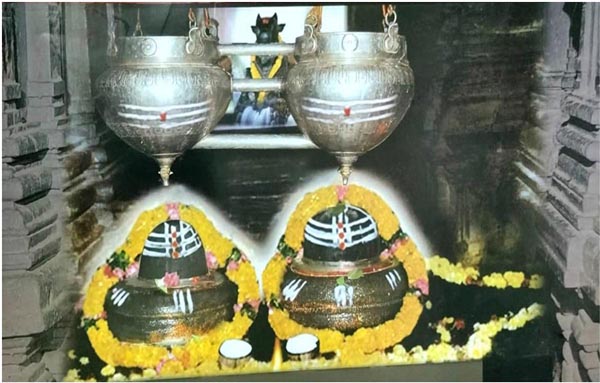
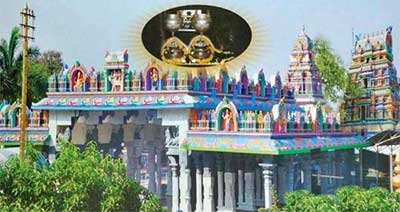
It is mentioned in the Kaleshwara Kanda that residing in Kaleshwaram, learning about Kaleshwaram, remembering Kaleshwara, or visiting him will remove all sins and bring happiness and prosperity. In Kaleshwaram, Lord Kaleshwara Swamy (Yama) and Lord Mukteeswara Swamy (Shiva) have appeared on a single pedestal with two lingams. The lingam of Mukteeswara Swamy has two nostrils. No matter how much water is poured for the abhishekam, not a single drop overflows; instead, it flows underground and emerges as the Saraswati River, merging with the Godavari and Pranahita rivers at their confluence. This confluence of three rivers is known as Triveni Sangam, where Pushkaras are held every 12 years.
This Shaiva pilgrimage site, Kaleshwaram, grants the wishes of every devotee who visits and prays here. In the past, before the Kali Yuga, just by having the darshan of Adi Mukteeswara Swamy, devotees attained salvation and were guided to Kailasa. Due to this, no souls were going to Yama Loka (the realm of Yama), causing it to become stagnant, and punishments were no longer being enforced.Seeing this problem, Yama Dharma Raja (Lord of Death) pondered over the situation until Narada Maharshi appeared and said, “O Yama Dharma Raja! Every devotee visiting Lord Mukteeswara in Kaleshwaram is attaining liberation and being sent to Kailasa. That is why no souls are entering your realm. If this continues, your Yama Loka will lose its purpose. You must go to the earthly realm and seek Lord Shiva’s blessing to restore your governance.
Following this advice, Yama Dharma Raja came to Kaleshwaram and performed great penance at the Yama Kona (a specific place in the temple) to please Lord Shiva. Lord Shiva and Goddess Parvati then appeared before him and asked,”O Yama Dharma Raja! What is the reason for your penance?”Yama Dharma Raja bowed to them and said, “O Great Lord! Every devotee who visits and sees you is attaining liberation and reaching Kailasa. My Yama Loka has become empty, and I and my assistants have no work left. What is my duty now, Lord?” Then, Lord Shiva explained,”O Yama Dharma Raja! In the Kali Yuga, the number of sinners will increase tremendously, and Yama Loka alone will not be sufficient to punish them. That is why I will remain in Kaleshwaram as Mukteeswara Lingam. You should attain Shiva Tattva (divine essence of Shiva) and establish a lingam in your name next to me. From then on, any devotee who comes to Kaleshwaram and sees your Yama Lingam will be freed from Yama’s sufferings, and I will grant them liberation. However, those who do not visit Kaleshwaram or seek my darshan will be taken to Yama Loka, where they will face punishments as per their karma.
Thus, Lord Shiva commanded Yama and manifested as Mukteeswara, as stated in the Kaleshwara Kanda. Since then, devotees visiting Kaleshwaram, praying, and offering worship have had their desires fulfilled, ultimately attaining the presence of Lord Shiva. The Significance of Kaleshwaram Over Kashi Kaleshwaram is often called “Superior to Kashi.” In Kashi (Varanasi), Lord Vishweshwara grants salvation only to those who die there. However, in Kaleshwaram, Mukteeswara bestows liberation simply by being seen.
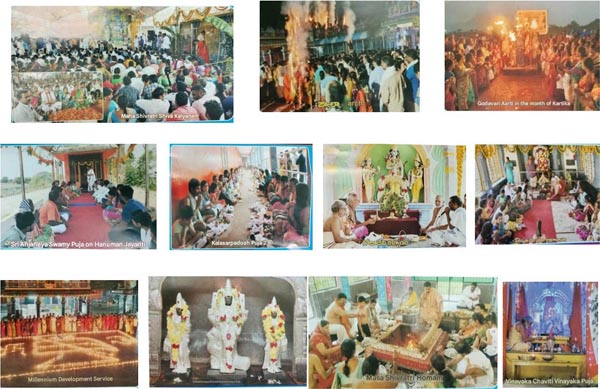
In this sacred site, Goddess Shubhananda Devi (Parvati Devi), the consort of Mukteeswara, grants happiness and prosperity to devotees. Many people offer vows (pledges) to her, believing that their wishes will undoubtedly be fulfilled. The temple conducts various special rituals and prayers, including: Rudrabhishekam,Shani Puja (Saturn Worship),Kaalasarpa Dosha Nivarana Puja,Kumkum Archana,Surya Puja (Sun Worship),Lakshapatri Puja,Shiva Kalyanam,Anna Puja,Chandi Homam.
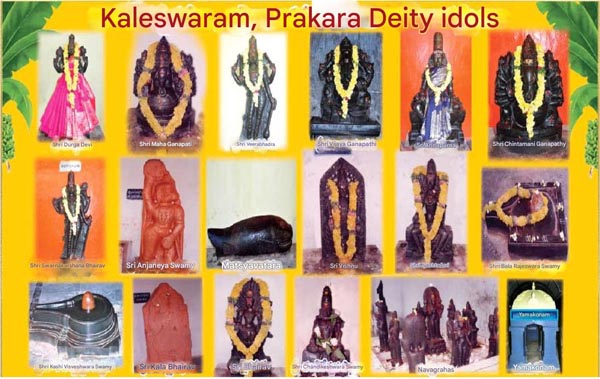
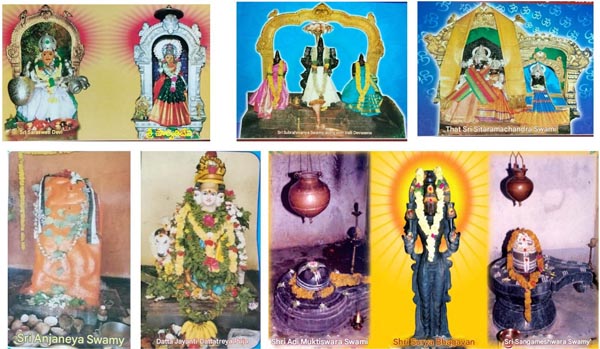
This sacred place is home to several other temples, including: Shubhananda Devi Temple (Parvati Devi),Saraswati Devi Temple,Sri Rama Temple,Adi Mukteeswara Temple,Sangameshwara and Dattatreya Temple,Sri Anjaneya Swamy Temple,Sri Surya Temple.
According to the Kaleshwara Kanda, this Shaiva Kshetra (Shiva pilgrimage site) predates the Kali Yuga. In 1140 CE, during the reign of the Western Chalukyas, King Jagadekamalla attempted to strengthen his rule and annexed the Manthani region, which was under the control of a local ruler, Dundaraju. Before this, the area was under the rule of the Vemulawada Chalukyas, as inferred from inscriptions in Chennur, located on the other side of the Godavari River. Later, during the rule of the Kakatiya dynasty, this region was incorporated into their kingdom. Kakatiya Rudradeva, a great statesman and devout ruler, appointed his minister Ellanki Gangadhar as the administrator of the region. It was Gangadhar who built the Shiva temple at Kaleshwaram, as recorded in an inscription from 1171 CE at Nagunur. The confluence of Godavari and Pranahita Rivers was historically known as Samvartakeshwara Kshetra, which received numerous grants and donations from Kakatiya kings and their feudal lords. During this time, Samvartakeshwara was the presiding deity of that region, while Kaleshwara and Mukteeswara became prominent deities of Kaleshwaram.
Temple Guide Lines
Sri Kaleshwara Muktiswara Swamy Devasthanam (Kaleswaram)
Important instructions for devotees
| Instructions |
|---|
| 1. Photography and videography is strictly prohibited in the main Temple and Temple premises. |
| 2. Triveni Sangam flows very rapidly due to the confluence of Godavari, Pranahita, Gupta Saraswati rivers. |
| 3. River Godavari has eddies which are very dangerous, so don’t go beyond knee deep. |
| 4. Bathe your children under your supervision. |
| 5. Keep the bathing place in Godavari river clean. |
| 6. Godavari river is very holy, holy bathers can keep the river clean. |
| 7. Do not use soaps and shampoos in Godavari river. |
| 8. Plastic covers, blankets and broken pots should not be thrown in Godavari river. |
| 9. Those who have bathed in the river should not throw their clothes in the river, otherwise the results of the bath will not be attained. |
| 10. Those who perform Shani Pooja should not throw their clothes in the river after bathing. |
| 11. Follow the warnings and instructions given by the devasthanam through the microphones. |
Main Pooja Details
| Pooja Name | Price (Rs) |
|---|---|
| Abhishekam (In Garbhalayamu) | 1000/- |
| Kalasarpadosa Nivarana Pooja | 600/- |
| Navagraha Pooja | 300/- |
| Kumkumarchana | 150/- |
Services / Pooja Details
| Pooja Name | Price (Rs) |
|---|---|
| Garbbhalaya Abhishekam | 1000/- |
| Mandapa Abhishekam | 300/- |
| Abhishekam of Adimuktiswara Swamy | 100/- |
| Laghurudrabhishekam | 6000/- |
| Rudrabhishekam of great charity | 2000/- |
| Anna Pooja | 200/- |
| Lakshapatri Pooja | 6000/- |
| Shiva Kalyanam | 1000/- |
| Chandi Homam | 2000/- |
| Navagraha Homam | 1000/- |
| Navagraha Pooja | 300/- |
| Kalasarpadosa Nivarana Pooja | 600/- |
| Sri Satyanarayana Swamy Vratham | 1000/- |
| Akshara Srikaram | 200/- |
| Odi rice & sari tying | 50/- |
| Kumkumarchana | 150/- |
| Quick Darshan | 100/- |
| Yamakonam / Gandadeepam | 10/- |
| Vedic blessing | 350/- |
| Swamivarla Ammavarla Locket (Capercaine -1) | 60/- |
| Permanent Abhishekam (10 years only) | 2116/- |
| Permanent Shiva Kalyanam (10 years only) | 2116/- |
| Permanent Nityabhishekam (10 years only) | 18000/- |
| Permanent Nitya Nivedana (10 years only) | 25000/- |
| Permanent Anna Pooja (10 years only) | 10116/- |
| Food patrons (10 years only) | 5116/- |
| Royal Patrons of Annadana (10 years only) | 10116/- |
| Annadana Maharaja Patrons (10 years only) | 25116/- |